
Loudoun County Release Meanings
A Loudoun County release entry should identify who held the person, when that custody changed, and where the person went next. Release on bond or recognizance ends the current jail hold while the case continues. Time served or sentence served links the departure to the confinement part of a judgment. Probation is supervision ordered by a court. Parole is release under Virginia Parole Board authority for a sentence that remains parole eligible. A dismissal or acquittal is a court outcome, but another charge or hold may still control physical custody.
Some departures are not returns to the community. Transfer to the Virginia Department of Corrections, another jail, a hospital, ICE, or another authority means the person left the Loudoun County Adult Detention Center while custody continued. Death also ends a jail custody entry, but it is not a community release. The agency's movement record and receiving-authority field matter more than the bare fact that a name no longer appears.
| Release or movement | What it means | Best next source |
|---|---|---|
| Bond or recognizance | The jail hold ends while the criminal case remains pending. | LCSO release record and Loudoun court case |
| Time or sentence served | The confinement term ended, subject to any other hold. | Release record and sentencing order |
| Probation or parole | Secure custody may end while supervision continues. | VADOC locator, court order, or Parole Board record |
| Transfer or detainer | The person left one facility but stayed in another authority's custody. | Movement record and receiving agency |
| Dismissal or acquittal | A charge ended without conviction, though another hold may exist. | Each court case and the jail record |
- Discharge
- The end of the sentence or supervision obligation recorded by the responsible agency.
- Time served
- Credit for confinement already completed under the controlling judgment.
- Detainer
- A request or legal basis for another authority to take or keep custody.
- Expungement
- A court process that can remove qualifying records from ordinary public access under current law.
Loudoun County Release Record Fields
The LCSO booking and release transaction is the strongest local source for the physical event. Identity details tie the event to the correct booking. Timing fields distinguish a scheduled court date from the actual time the jail ended its hold. Disposition and destination fields show whether the person returned to the community or went to another custodian. A court docket may explain why the action occurred, but it may not preserve the jail's exact release timestamp.
A focused request should seek the fields needed to resolve the question. It can also ask LCSO to identify any withheld field and cite the legal basis. The record may contain public and exempt material, so redaction does not always mean the entire segregable record must be withheld.
| Field | What it shows |
|---|---|
| Legal name and aliases | The identity used in the booking and other known names. |
| Date of birth and recorded demographics | Details used to separate people with similar names. |
| Booking number | The identifier for the specific Loudoun jail episode. |
| Booking or admission time | When the local custody transaction began. |
| Charges and committing court | The legal matters tied to that booking. |
| Bond information | The bond terms recorded for the case or hold. |
| Actual release date and time | When LCSO ended that custody episode. |
| Release reason or disposition | Bond, sentence completion, transfer, or another recorded outcome. |
| Destination or receiving authority | Whether custody ended or continued elsewhere. |
Note: No official Loudoun source states how long a released booking remains displayed online because no public release archive was found.
Requesting Loudoun County Release Records
Send a local jail request to the LCSO public-records portal or Records Services because the Sheriff is custodian of its own booking and movement records. State that the request is made under the Virginia Freedom of Information Act. Include the full name, aliases, date of birth if known, booking number if known, and the approximate booking period. Ask for an electronic copy and a cost estimate before work exceeds a chosen amount.
- Identify the person and the specific booking as narrowly as possible.
- Request booking time, actual release time, release reason, destination, bond data, charges, and the booking photograph if it is needed.
- Distinguish release to the community from transfer to VADOC, another jail, a hospital, ICE, or another authority.
- Ask LCSO to cite the statute for each withheld field and release any segregable portion.
- Keep the response with the court disposition and any receiving-agency result.
Virginia Code § 2.2-3704 generally requires a response within five working days. The agency may produce records, withhold with a legal basis, provide a mixed response, report no responsive record, or use a statutory extension when allowed. That deadline is for a response, not a promise of full production. Reasonable actual costs may apply, and an advance deposit may be required when the estimate exceeds the statutory threshold.
LCSO Records Services803 Sycolin Road
Leesburg, VA 20175
Mailing: P.O. Box 7200, Leesburg, VA 20177
703-777-0629
Monday-Friday, 9 a.m.-4:30 p.m.
Loudoun Release Records and Sealing
Virginia FOIA provides access to existing public records. It does not make an agency create a new report or answer a research questionnaire. Virginia Code § 2.2-3706 controls key access rules for law-enforcement and criminal records. Adult arrest information and routine initial-intake booking photographs can be public on request, subject to the statute's stated limits and other lawful restrictions.
Sealed, expunged, juvenile, medical, victim, and security material may not be open. A blank online result can therefore be legally correct even though a booking once occurred. Under the law in force through November 30, 2026, the conventional petition process in § 19.2-392.2 focuses on qualifying outcomes such as acquittal, nolle prosequi, certain dismissals, an absolute pardon, or use of another person's identity. Revised language takes effect December 1, 2026, so the effective version and current court forms must be checked.
Note: A court disposition and a jail release transaction are separate records, even when both concern the same charge.
Loudoun Release Fees Are Not Universal
Loudoun's facility material reports two different program charges. It states a one-dollar-per-day local confinement charge under Virginia Code § 53.1-131.3. It separately reports a $12-per-day charge for Work Release Center participants. These amounts arise from different programs. Neither should be described as a standard fee paid by every person at release.
Records-request costs are different again. Loudoun's published schedule lists black-and-white pages at $0.08, color pages at $0.15, a DVD at $1, and a flash drive at $4. Electronically supplied records have no per-page copying charge when they are not printed, though search and review labor may still be billed at reasonable actual cost. A deposit may be required when the estimate is more than $200. An individual account question belongs with the facility, while a records cost question belongs with the responding records office.
Find Loudoun County Released Inmates
Start with the last agency known to hold the person. Loudoun County does not publish a verified current jail roster or a rolling 24-hour or 72-hour release feed. For a local booking, use Virginia Jail VINE and call the Adult Detention Center. Then obtain the LCSO release or movement record. The record resolves whether the event was bond, sentence completion, transfer, or a handoff under another hold.
- Search the person in Virginia Jail VINE and note the exact event and facility.
- Call 703-777-0405 for immediate clarification about whether the person remains at the Adult Detention Center.
- Request the LCSO booking, release, and destination fields for lasting proof.
- Check General District and Circuit Court records for the controlling disposition, sentence, appeal, or bond order.
- Use VADOC only if the person entered state custody or state community supervision.
- Use BOP or ICE only when federal or immigration authority is supported by the custody trail.
A VINE release event is useful for a timely check, while the jail movement record is stronger for history. A court outcome explains legal authority. If identifiers or dates conflict, use the signed court or release document and contact the responsible custodian before reaching a firm conclusion.
Loudoun Release Checks Without a Feed
Virginia Jail VINE covers participating local and regional jails and supports a person-specific custody check. Search by identifying information, open the matching record, and read the event label. Release, transfer, escape or return, and death are distinct events. Transfer does not mean community return. Once that incarceration episode ends, notification updates for it end as well, so VINE is not a permanent archive.
The official Virginia Jail VINE screen shows the correct statewide entry point for a Loudoun local-jail check.

The interface supports the first local check, while LCSO's release transaction remains the durable source for the exact movement and destination.
No official rolling list was found. Use VINE for a named person, the jail telephone for prompt clarification, and an LCSO request for the historical record.
VADOC Search for Loudoun Releases
The VADOC Inmate and Supervisee Locator covers people in Virginia state facilities and people under specified state community supervision. It is not a Loudoun booking archive. A state-facility location means incarceration continues. A district-office or supervisee result may support release from secure state custody while probation or parole continues.
| Search field | How VADOC uses it |
|---|---|
| Seven-digit DOC ID | The most precise identifier when known. |
| First name | At least the first three letters. |
| Last name | The full last name is required for a name search. |
| Location | An optional filter for facility or supervision placement. |
| Race, gender, age range | Optional filters used to separate similar names. |
The official locator page presents the state search and its disclaimer.
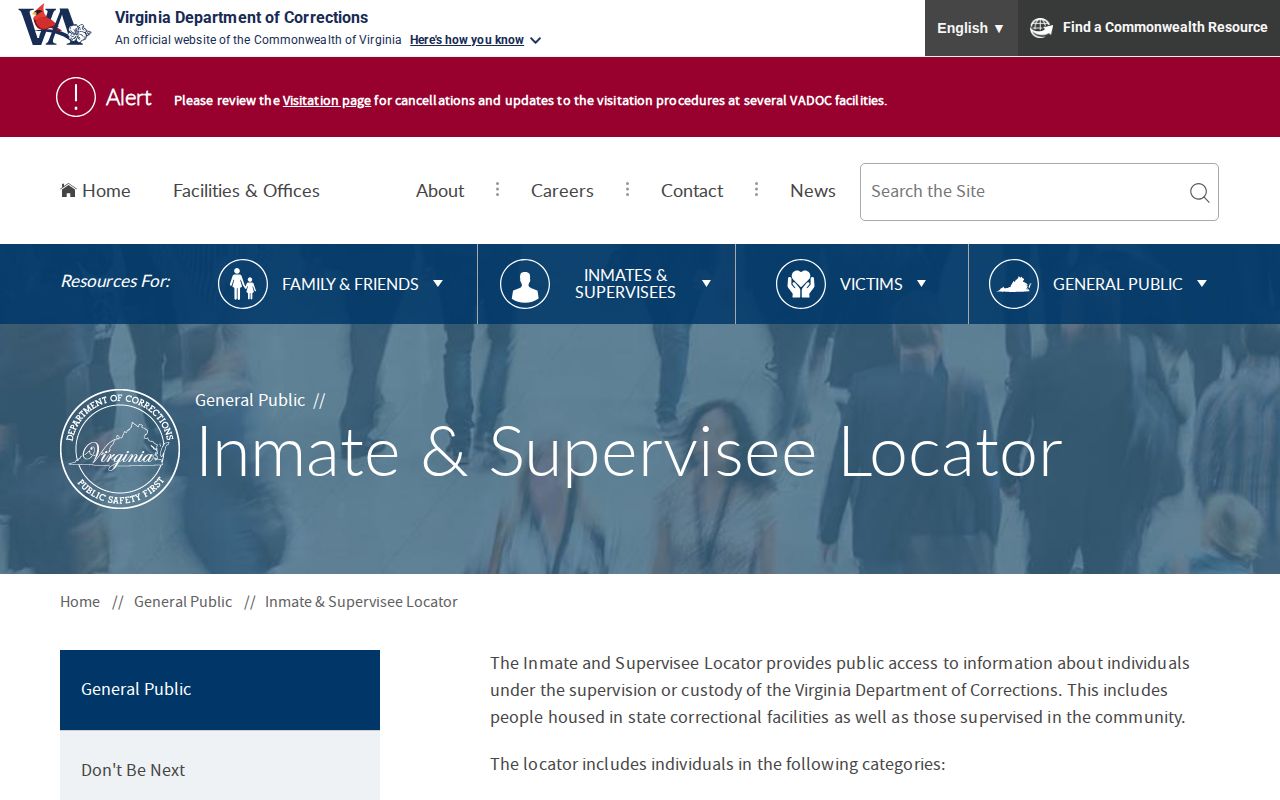
Compare DOC ID, name, demographics, current location or district, and the exact custody or supervision category. Use calculated or estimated release-date information only as labeled. VADOC updates the locator daily but warns that data can be inaccurate or out of date.
Note: No VADOC match can mean local-only custody, complete discharge, a spelling issue, federal custody, or a data limitation.
Loudoun Release Records Cross Two Courts
Loudoun release research often spans two adult court systems. General District Court handles misdemeanors and preliminary felony stages. A felony certified to Circuit Court continues there, and an appealed district matter can also move to Circuit Court. A district entry marked certified is not the final felony outcome. Search both levels, follow the case number, and read every charge separately because one dismissed count does not resolve another hold.
The General District Court portal is the starting point for Loudoun misdemeanor and preliminary records.
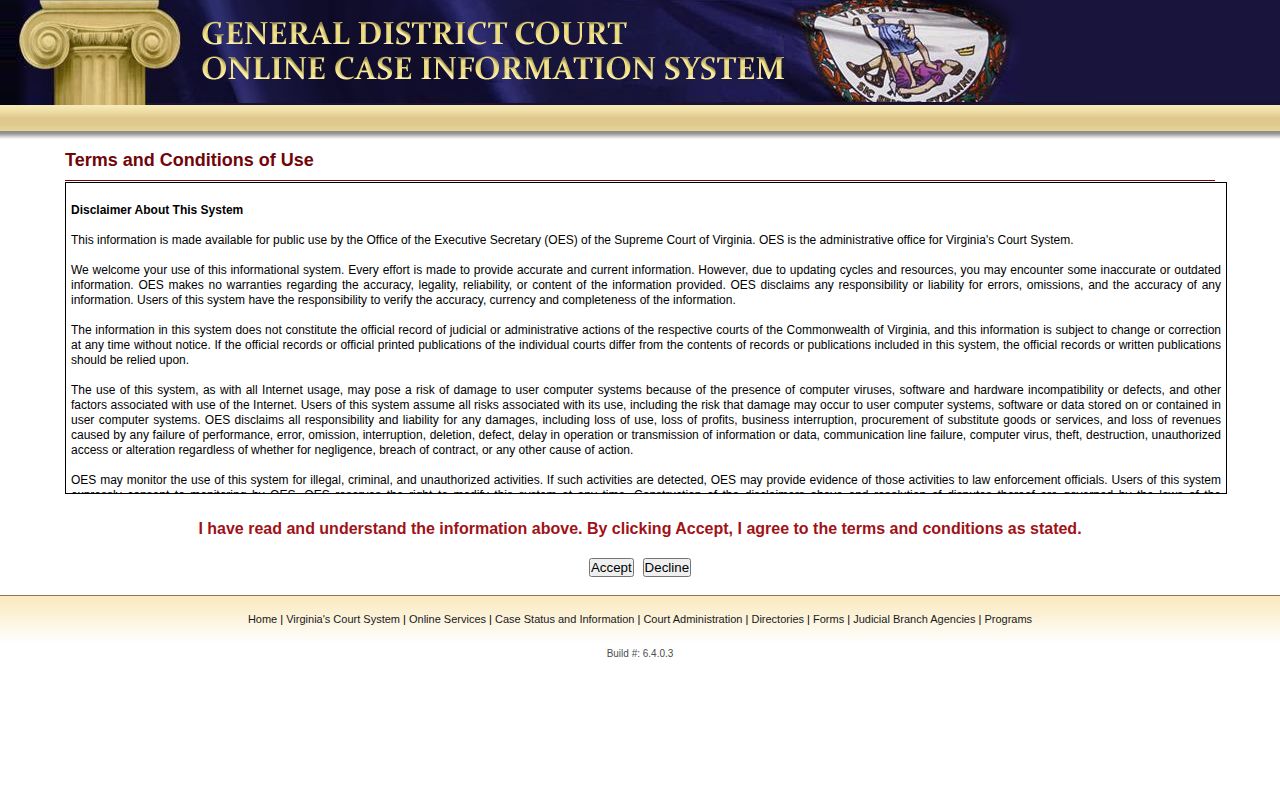
Its entries can show charge, hearing, disposition, sentence, suspended time, and probation details, but not necessarily the jail's physical release time. The separate Circuit Court case portal continues the trail for felony disposition and appeals.
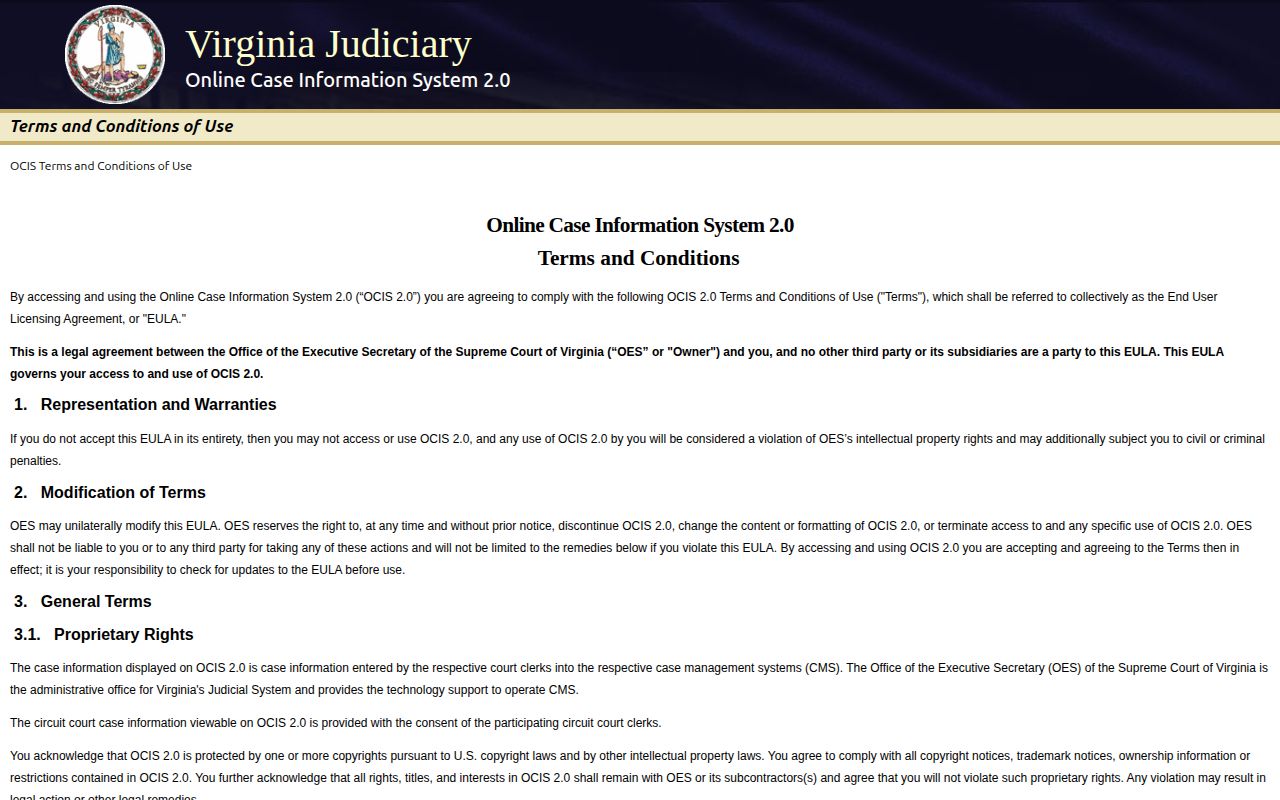
Together, the two systems explain the court path. The LCSO record still supplies the strongest actual release timestamp and receiving authority.
Loudoun Release Transfers Can Take Years
The Adult Detention Center says local inmates with terms of 12 months or less serve there. It also says some people can remain at the Loudoun jail for as long as three years before delivery to VADOC, including when an appeal stays the delivery. A person can therefore be state sentenced and still physically held in Loudoun. The felony sentence alone does not prove that a transfer has already occurred.
Check the LCSO movement record first. If it names VADOC as the receiving authority, continue with the state locator. If the person still appears at the Adult Detention Center, the court appeal and commitment records may explain the delay. This local fact makes the custody chain more reliable than an assumption based on sentence length.
Bond Orders Versus Loudoun Release Time
Loudoun's Magistrate's Office, Community Custody Program, and Adult Detention Center occupy the same complex, but their acts remain distinct. A magistrate can set bond. That decision does not create the jail's physical release timestamp. Bond conditions may also place a defendant with Loudoun Community Corrections for pretrial supervised release while the criminal case remains pending.
Use the bond order to understand legal authorization. Use the LCSO release transaction to confirm when the jail hold ended. Pretrial supervised release is not post-conviction probation and is not parole. If another warrant or detainer applies, a bond ruling in one case may not lead to community return.
Note: A bond order can authorize release without proving the time that jail processing ended or every hold cleared.
Work Release Is Not Discharge
The Loudoun County Work Release Center and Community Custody Program serve eligible nonviolent, minimum-security participants nearing community return. The Sheriff reports capacity for up to 96 participants. They may leave the complex for authorized work under strict rules and must return. That daily movement remains part of custody. It is not the final end of the placement.
Final discharge should be confirmed through the facility's release transaction and the sentencing court record. A phrase such as “released for work” must not be shortened to “released” without context. The same care applies to the Sheriff's inmate work force, whose movement for assigned work does not by itself end custody.
Loudoun Reentry Services After Release
Loudoun maintains both Reentry Services and a Reentry Advisory Council. That local coordination layer can help with identification and government records, courts, transportation, health, nutrition, veterans services, and information referrals after release. These programs support transition. They do not confirm whether a named person left custody.
Supervision must be checked through the correct agency. Loudoun's local Probation Division handles certain court-referred adults. VADOC District 25 handles state probationers and parolees in Loudoun, Fauquier, and Rappahannock Counties. Pretrial supervision is another local program and applies before final case disposition. More detail on these separate routes appears in the Loudoun County probation and parole resource.
Note: Reentry help supports a transition after release but is not evidence of custody status, discharge, probation, or parole.
Federal and Immigration Release Checks
For a federal prisoner connected to Loudoun, use the BOP Inmate Locator and the federal court docket. The locator covers federal inmates from 1982 forward. It accepts BOP register, DCDC, FBI, or INS numbers, or a name with age, race, and sex filters. Results can show name, register number, age, race, sex, release date, and location. “Released” or “Not in BOP Custody” only ends the BOP part of the inquiry. It does not rule out supervision or another authority's custody.
The official BOP locator is the matching federal search channel for a Loudoun-connected case.
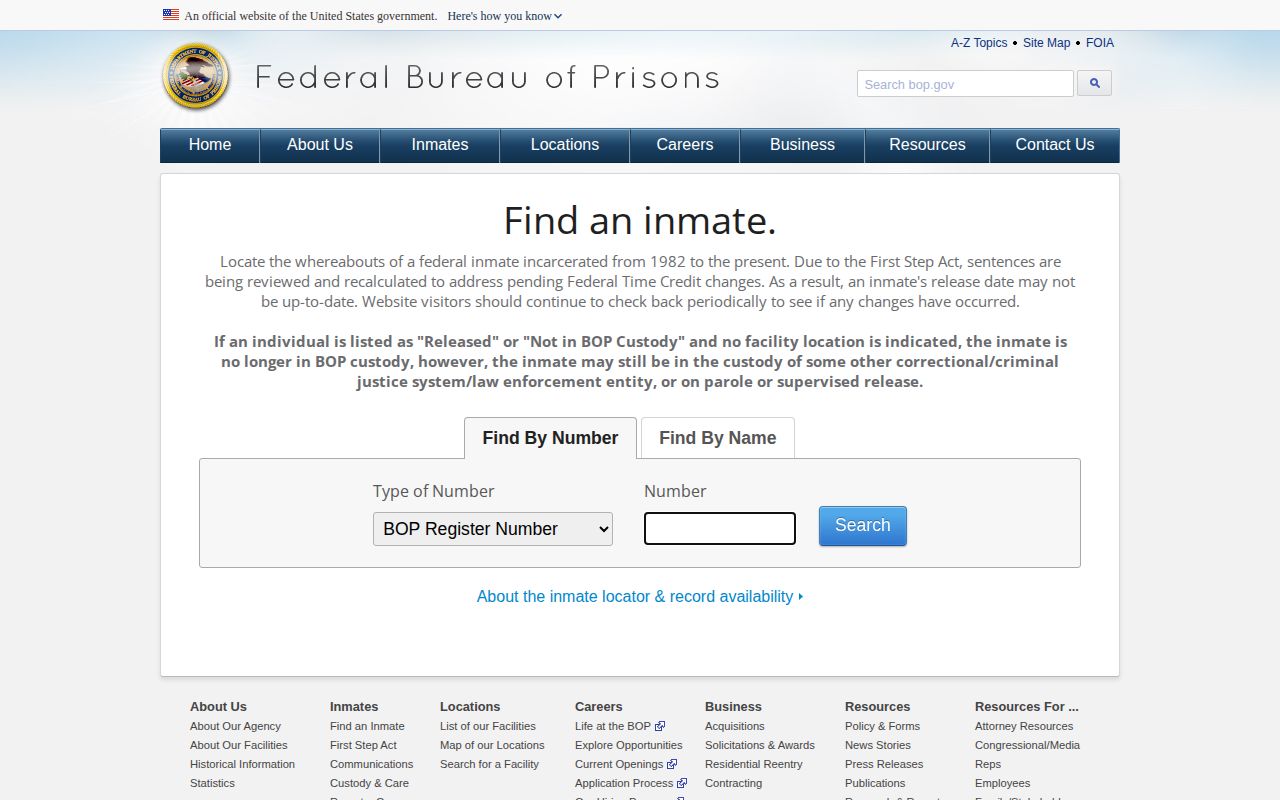
A federal defendant may have occupied a local contract bed without becoming a local Loudoun prisoner. U.S. Marshals custody and the federal docket explain that pretrial chain. If an LCSO movement record names immigration authority, ICE's current detainee locator and the responsible office are the next channels. An ICE no-result is not proof of release, and no fixed post-release display window should be assumed.
Note: No VADOC prison, BOP institution, or dedicated ICE detention center was identified within Loudoun County.
Loudoun Released Versus Held Status
Each system answers a limited question. Use the source tied to the agency and event, then compare dates and identifiers. A live custody tool is best for a prompt status check. A certified or official record is stronger for a past event.
| Situation | Where to look | What it can establish |
|---|---|---|
| Current Loudoun local-jail custody | Virginia Jail VINE and 703-777-0405 | Current reported jail status or a timely event |
| Past Loudoun jail release or movement | LCSO release record and court case | Actual time, reason, destination, and legal context |
| VADOC prison or state supervision | VADOC Inmate and Supervisee Locator | State facility or district supervision status |
| Federal prison history | BOP locator and federal docket | BOP status and federal case context |
| Immigration custody | ICE locator and responsible authority | Current detention information when available |
| Juvenile detention | Authorized juvenile agency and court channels | Confidential information only for an authorized person |
A released person may no longer appear in the live local system. A VADOC supervisee result can show community supervision after secure custody, but a person fully discharged from both incarceration and supervision may fall outside the locator's stated coverage. Historical proof then comes from the agency record and controlling court file.
Loudoun County Release Facilities
Three Loudoun detention settings require different release paths. The Adult Detention Center is the primary adult jail. Its departure record may show community release or continued custody elsewhere. The work-release component remains custody during authorized daily movement. Juvenile detention uses confidential processes and is not an adult released-inmate search channel.
- Loudoun County Adult Detention Center: use VINE and the jail for prompt status, then the LCSO movement record and court case.
- Loudoun County Work Release Center / Community Custody Program: distinguish daily authorized movement from final discharge.
- Loudoun County Juvenile Detention Center: authorized parties must use confidential juvenile court and agency channels.
A Loudoun conviction can also lead to confinement elsewhere. State prisoners may be placed anywhere in the VADOC system, and federal prisoners may be designated outside Virginia. Place of arrest, court origin, and place of confinement are not the same fact.
Public Record Search
Sponsored Results